
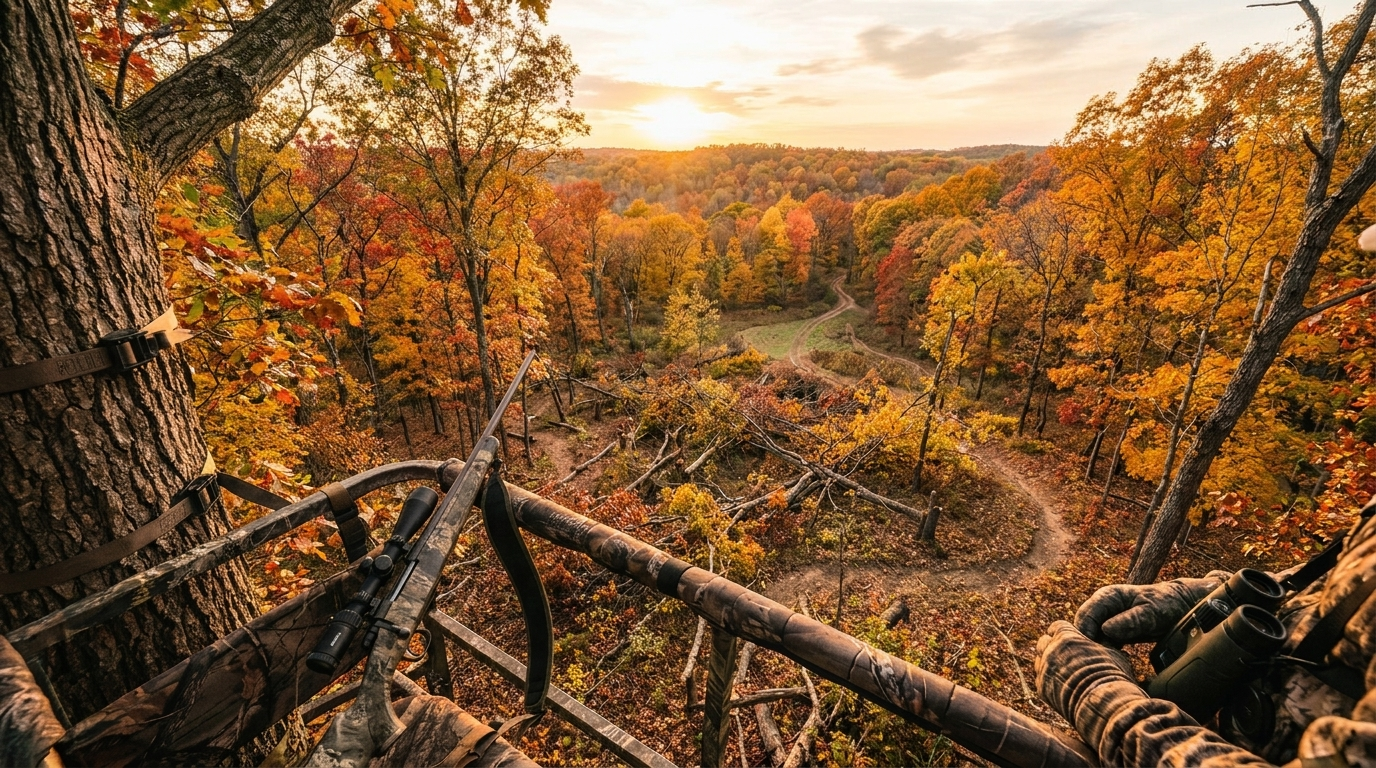
When it comes to dog tracking vs drone for deer recovery, thermal drones are quickly becoming the preferred method for hunters who want a fast, quiet, and non-intrusive recovery. Tracking dogs have earned their place in hunting tradition, but they come with real limitations that a thermal drone simply does not have.


Why Hunters Are Comparing Dog Tracking vs Drone for Deer Recovery
Every hunter who has lost a blood trail knows the stress of that search. For decades, tracking dogs were the only real option beyond walking the woods yourself. Today, more hunters are asking the dog tracking vs drone for deer recovery question because thermal technology has changed what a fast, ethical recovery actually looks like.
When in Doubt, Back Out
One of the best things a hunter can do after the shot is exercise patience. If you did not see the deer go down or you are not finding a clear blood trail, back out. Give it time, then track the first fifteen to forty yards carefully before committing further into thick cover. Pushing forward too soon on a questionable hit is one of the most common reasons a recoverable deer turns into a lost one.
The Problem With Dog Tracking
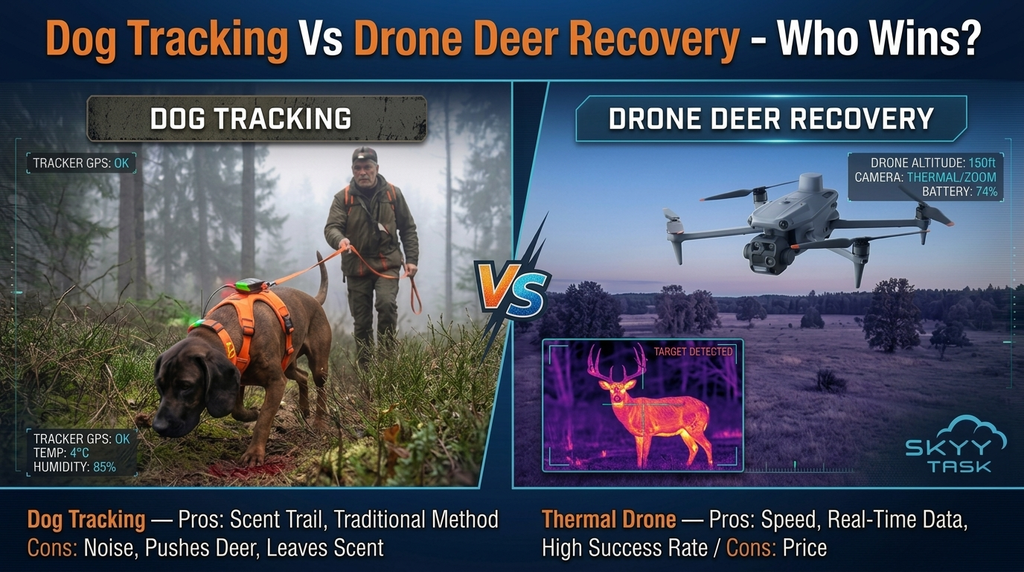
Tracking dogs work, but they come with tradeoffs that matter to a serious hunter. A dog on a trail is loud. Handlers calling out through the woods, dogs wearing bells, and the general noise of a ground search can travel a long way through quiet timber. That noise, combined with the dog and handler moving directly through the area, can push an already wounded deer deeper into cover instead of letting it bed down and expire where it fell.
This is one of the biggest risks with dog tracking vs drone for deer recovery. If a dog pushes a wounded deer off your land or out of sight before it has expired, the deer can become unfindable, and you are still responsible for the tracker’s donation fee even though the outcome was a lost deer. A thermal drone never puts a body on the ground near the deer, so there is no risk of the search itself causing the animal to run.
Ground tracking also leaves scent behind. Handlers and dogs walking through the woods introduce new human and animal scent into the exact area a hunter is trying to search cleanly. For hunters who take scent control seriously before the shot, a loud, scent-heavy ground search afterward can undo a lot of that discipline.
This is exactly why the dog tracking vs drone for deer recovery debate keeps coming up every season, hunters want the option that actually gets results.
A thermal drone changes the entire approach. Instead of walking through the woods and risking pushing the deer, a pilot puts the drone in the air and searches the area from above without the deer ever knowing anyone is nearby. Thermal imaging picks up body heat instantly, so a downed deer lights up clearly on the pilot’s screen even in total darkness or thick brush where a ground crew would see nothing.
This is where a skilled drone deer recovery pilot adds real value beyond just finding the deer. While the drone hovers above the scene, an experienced operator can often tell you the shot placement, whether the deer appears to be alive or expired, and how much longer you may want to wait before approaching. That kind of real-time read is something a tracking dog simply cannot offer.
Speed Matters for Meat Quality, Too
Recovery speed is not just about peace of mind, it affects the meat. The longer a deer sits unrecovered, the more time bacteria has to grow, especially in warmer early-season weather, and gut contents left too long can taint the meat before it is ever field dressed. A drone that finds a deer in minutes instead of hours gives you a much better chance of bringing home meat that is still good to eat.
An Old Method With Its Place, but Not the Fastest Anymore
Dog tracking has earned its seat at the table, and there will always be hunters who prefer it. But for the hunter who weighs scent control, minimizing intrusion, and the real risk of a dog pushing a deer before it expires, thermal drones are quickly becoming the more reliable choice for dog tracking vs drone for deer recovery. No barking, no ground noise, no new scent trail, and no donation fee spent chasing a deer that got pushed out of reach, just a pilot in the air finding your deer in a fraction of the time.
Book a Certified Pilot for Your Next Recovery
SkyyTask connects hunters directly with FAA-certified thermal drone pilots, verified through the FAA Airman Certification Database, so you know exactly who you are working with before a pilot ever arrives. If this season has you weighing dog tracking vs drone for deer recovery, visit the Drone Deer Recovery, Thermal service page to learn more and request a certified pilot near you.